

Five Facts About Perinatal Mood And Anxiety Disorders
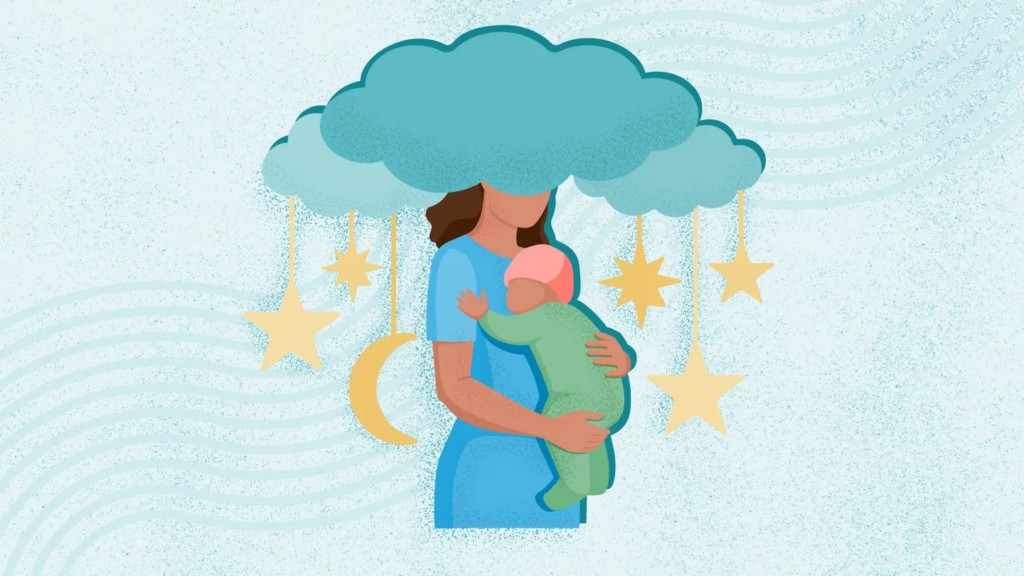
“I finally had a healthy beautiful baby girl and I couldn’t look at her. I couldn’t hold her and I couldn’t sing to her and I couldn’t smile at her … All I wanted to do was disappear and die. … If I had been diagnosed with any other disease, I would have run to get help. I would have worn it like a badge…”
– Brooke Shields
Has anyone seen Little Fires Everywhere on Hulu? My husband and I spent a chunk of the pandemic watching it (and ya know…everything else since the world was cancelled!)
There’s a scene maybe six episodes in where one of the main characters has her fourth baby. Her other children are under four years old and the baby won’t nurse and won’t stop crying. The house is a wreck, the other children are crying or toddling around and mom is just beside herself. In her frustration, she accidentally breaks a plate. She stares at it for a moment and then starts to purposely throw plates on the kitchen floor, one at a time, screaming at the top of her lungs each time they shatter. All the kids are wailing and she’s wailing and there’s ceramic plate glass everywhere. It’s a really hard scene to watch, especially if you’ve ever experienced anything like that. It was hard for me to sit through; I identified with it so much.
When my youngest was born, my older girls were 5 and 3. This baby was unlike anything I had experienced thus far as a mother. She was SO. NEEDY. She cried all the time. She wouldn’t nap outside of my arms (and didn’t for her entire first year). She wouldn’t go to my husband. She wouldn’t go to my mom. All she wanted was me. My arms, my boobs, my attention, it felt like my SOUL at times. All. Of. It. I used to say that if she could have climbed back inside of my uterus, she would have gladly done so.
After weeks of this, I started to feel completely and utterly trapped. I couldn’t go out alone or she would cry the whole time with whoever I left her with. My own mother offered to watch my older too but…“not the baby.” I couldn’t take a shower without her screaming the whole time. She hated the car and screamed everywhere we went for (no joke, guys, I am not exaggerating) the whole first year of her life. Not just whining or whimpering – this was bloodcurdling, can’t catch her breath, gagging and nearly puking screaming. The number of times I took off my shirt in public and threw it in her seat just to see if my smell would calm her down…well, let’s just say I’m sure many residents of Bel Air have seen me driving my car topless.
This was new territory for me, even though she was my third child, and that made it worse somehow. I wasn’t a new mom! I should know what I’m doing! How can I feel so completely confused, lost and incompetent with this baby?
I started to have really upsetting thoughts, thoughts that I felt too ashamed to share with anyone. Thoughts like I regretted having her. Thoughts like I hated her, that there was something wrong with her, something wrong with me. I was angry a lot of the time. I had no patience for my older children, my husband, or even myself.
And then I started having some really dark thoughts. Once I was giving her a bath and “saw” myself holding her under the water. Now, let me be clear – I was horrified by those thoughts. I loved my baby. I would have never, ever hurt her. I couldn’t even let my children cry it out – their distress was mine too. I was just so tired, so overwhelmed. I felt out of my element, useless, and completely and utterly stuck.
About four years after that, I took a webinar for perinatal mental health for CEU’s for my license. Sitting in my office listening to the instructor list all the signs of postpartum depression (PPD), I realized that the anger, sadness, and thoughts about harming my baby all had a name. One thought, shocking, but I knew in that moment absolutely true – I had PPD with my last baby.
I’m a therapist, trained and certified in perinatal mental health and I work frequently with moms…and I missed it. I mean, as a therapist, I am also a human. And I was also just a mom – an exhausted, hopeless, struggling mom, who felt very alone despite the family, friends, and supportive husband I had. I just couldn’t see it. I was so consumed by how I felt.
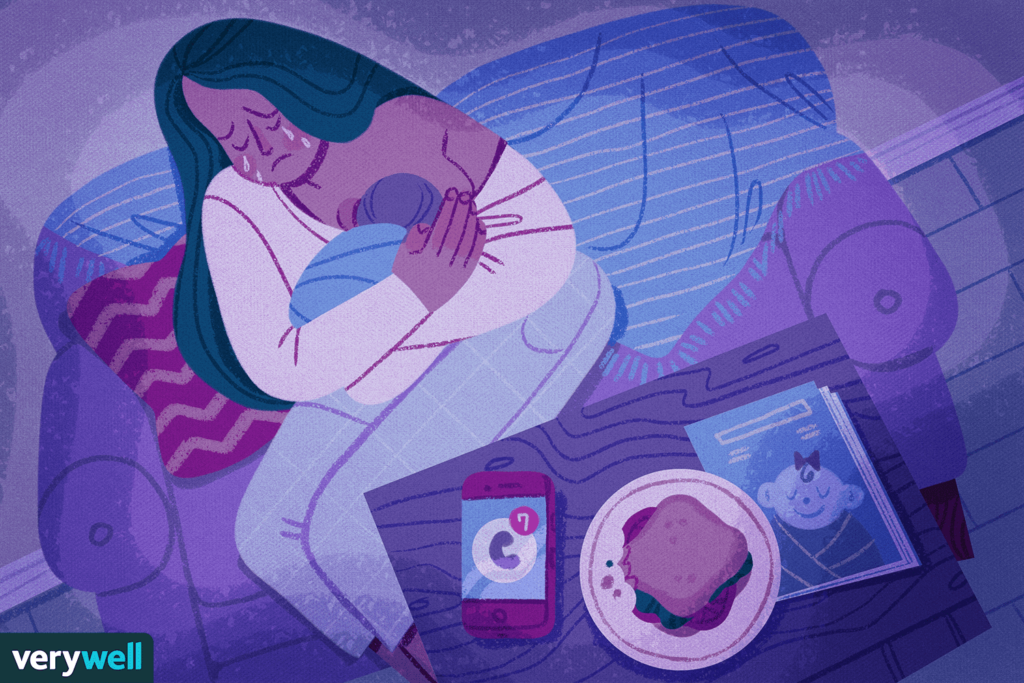
May is Maternal Mental Health Awareness month. In that spirit, I wanted to provide some facts of PMAD’S. My hope is to provide more education about these very important conditions, to take the shame out of them, to bring them out of the darkness and into the light.
- PMAD’s is a broad term that encompasses any mood (depression, bipolar, or psychosis) or anxiety (generalized anxiety disorder (GAD), panic, obsessive compulsive disorder (OCD) or posttraumatic stress disorder (PTSD)) disorder that occurs in the perinatal period (during pregnancy or the postpartum period) and gets in the way of daily functioning.
- PMAD’s can affect anyone! Moms with money and mamas without. Moms who wanted and planned their babies and mamas who didn’t. Moms with doctorate degrees and those who didn’t graduate high school. It does not discriminate.
- PMAD’s affect 1 out of 7 women and 1 out of 10 men. That’s right – PMAD’s CAN affect dads as well.
- The risks of untreated PMAD’s are vast, including: relationship problems, poor adherence to medical care, separation or divorce, alcohol or drug use, unemployment, and in some extreme circumstances, infanticide, homicide, or suicide.
And finally, probably the most important:
- The “baby blues” does not last longer than two weeks.
We get this one wrong all the time! If you are over two weeks postpartum and feeling symptoms of depression or anxiety you need to be evaluated for a perinatal mood disorder. The baby blues is truly an adjustment to hormones after you give birth and is not related to stress or psychological illness. They peak at 3 to 5 days after birth and resolve on their own. PMAD’s are different – they need treatment to resolve. They will not go away, no matter how much time passes.
So, if any of this seems like you, please know that you are not alone, you are not to blame, and with the proper treatment, you can feel a lot better. The most important step is getting help! This directory allows you to search for maternal mental health specialists who are trained and certified in perinatal and maternal mental health, which means you would be working with someone uniquely trained to help. And of course, if you’re in Maryland or Pennsylvania, I would be honored to work with you. Don’t let your mental health rob you of this special time with your baby and more important, your happiness as a person.
_________________________________________________________________________________________
Erin Newton, LCPC, PMH-C is a life-long resident of Harford County, Maryland. She’s a mother to three girls and has been married to her best friend for twenty years. She has been a therapist for over a decade and in that time has worked with 100’s of individuals, couples, and families during some of life’s most challenging chapters – welcoming a new baby, navigating postpartum emotions, managing anxiety, processing traumatic events, and rebuilding connection between partners. She specializes in birth trauma, maternal and perinatal mental health, first responder wellness, anxiety, OCD and relationship and connection issues. She is a quilter, retired marathon runner (twice!) and has been rockin’ rainbow hair since the fall of 2020.
She has immediate openings for new clients in both Maryland and Pennsylvania for both individuals and couples and can typically get an intake scheduled in a week or less. She is out of network with insurance so that together you can determine how much treatment you need, but can provide a Superbill for reimbursement and accepts an HSA card for services.