
Confessions of a Rule-Bending Therapist
“Blank slate” (or tabula rasa) therapy: a traditional psychoanalytic technique where the therapist remains neutral, anonymous, and unexpressive to allow clients to project their own internal feelings, experiences, and relationship distortions onto them.
_________________________________________________________________________________________
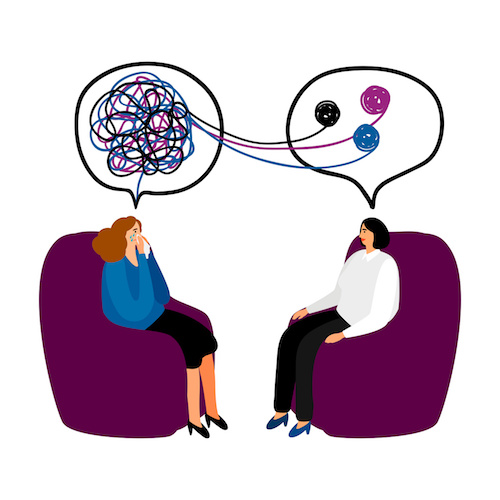
The above definition is how a lot of therapists are taught to approach therapy. It’s how I was taught and how I began approaching my work with clients when I started my internship in January of 2013. After I graduated and passed my exam, I started my first job working with kids…and that whole blank slate thing went right out the window. Let me tell you, a 13 year old angry at the world and everyone it in is not gonna tell me a damn thing if I just sit there and let them “use me to self reflect.” They’re gonna tell me to go fuck myself, frankly (and I know..because they did). No, I learned very quickly that I needed to be human, I needed to be vulnerable (within limits) and I needed to be real.
It’s such a weird relationship, the one you have with your therapist. I can’t come to your BBQ or your birthday party and as much as I would love to (seriously) we can’t go out for drinks when our session is over. I know things about you that you’ve never told anyone, I care about you deeply and think about you a lot…but I still can’t say hi in public if I see you first. It’s a super weird construct honestly.
While there are some boundaries that I think are super important, there are other things that I do regularly as a therapist that not all therapists are doing, and some may even say “break the rules.” Let me clear – these are not ethical violations and they’re not illegal either. They exist in a bit of a gray area, a space where a lot of us are trained not to go, but we also learn over time that sometimes that’s exactly where we need to go.
Here are some ways that I bend the rules in my work with clients.
Tell my clients about my life
The way that both I and a lot of therapists are trained is to participate in minimal “self-disclosure,” which is just a fancy way of saying “talking about your life.” Really extreme versions of this suggest that therapists shouldn’t wear wedding rings, shouldn’t have pictures of themselves with their spouse or children anywhere in their office, and should answer questions clients ask about them with “…what would it mean to you if I was married/had children/have hobbies?”
That’s…really weird. I’m sorry, but if someone asks me if I’m married or if I have children or if I do things for fun…I’m going to answer them truthfully. One, it’s just a really weird way to answer a simple question, but two, I’ve learned that people open up more and respond better to people they connect with, and a big way that people connect is by learning more about others. For example, fair or not, it’s pretty common that parents with their kids in therapy are more likely to listen to therapists who are also parents. Defensiveness in the space is often diffused with a well timed, “yeah, I’ve been there too” from me, especially if it’s something embarrassing or hard to admit (like…you screamed at your partner and slammed the door…me too, dude, me too…). It’s really important to be careful here; the whole session can and should not be about me. But if clients want to know something personal or I can offer an example from my own life to help them understand or open up? I’m doing it.

Sat and held a client while they cry
Typing that sentence out as something that’s controversial sounds crazy. Like, why wouldn’t you sit with someone while they cry?! This is nuanced, of course. I always ask, and I also have to have a good enough relationship with my client to know if that’s something they would want because I do know that some of my clients absolutely do not want to be touched and that needs to be respected. But sometimes not touching them feels like it could actually damage the relationship more because it feels like a form of neglect.
The first time this happened, I was working with a client I had for years and we did what I honestly thought was a pretty lame meditative intervention (side note: I use meditation a lot for my clients because it’s often helpful for them, but I don’t find it particularly useful myself). I finished it and expected my client to feel the same way, but instead, they burst into tears. This is a client with a long history of not being supported by others when they’re stressed and it took years to get them into therapy and then more time after that to trust me. Sitting across from them while they sobbed and I just nodded my head in silence felt…wrong. Cruel. Inhumane. So I asked, “hey, can I sit with you?” They nodded through sobs. I sat next to them on the couch and put my arm around them and just let them cry.
We actually processed it in a future session, and my client said that what I did felt so supportive after so many years of being in pain and not having it acknowledged. Since then I’ve done it only a few other times, always with permission, and always when the grief feels too big for my clients to hold on their own.
Worked separately with clients who are friends or siblings
This one I actually see frequently mentioned in my therapist groups on facebook. People frequently call it “unethical” and a “dual relationship.” I can see the dual relationship argument, and I also think there are times when this is not only totally fine, but it’s also really useful. I have a couple rules with this. I obviously cannot break confidentiality, which means if I work with your sister, we can’t spend the session with you trying to figure out what she told me in our session. I also always ask for some grace with these clients – sometimes I can’t remember who told me what and I could accidentally spill (very minimal) information. When I’m engaging in these relationships, I also have to make sure that these clients aren’t seeking services because they have issues with each other, because that very clearly becomes a conflict of interest. But getting to work with other people who know you intimately can give me a lot of insight that I can use to help you too..
Communicate outside of session
I really do think about my clients all the time, which means that I frequently see memes or reels that remind me of them. I certainly don’t send all of them, but if something hits particularly hard, I will absolutely copy it and send it. I’ve also texted my clients on a day I knew would be hard for them – anniversaries of deaths, anniversaries of due dates, birthdays, graduation days, first days of new jobs, divorce settlements, first days of college; etc. Even though it’s a professional relationship, it’s still a relationship. And relationships require communication and the feeling that someone is rooting for you.

Accepted gifts
I want to be clear with this one – therapists are not supposed to accept gifts (so please don’t read this and think you need to go get your therapist a gift, lol). Social workers actually are completely banned from accepting gifts, but I’m an LCPC, and my license says that I can accept gifts with a couple stipulations. One, it has to be something small. So like, a cup of coffee or a cookie, totally ok, but a car or a piece of jewelry? That’s a hard pass. The other stipulation is that to not accept the gift would cause harm to the relationship. I worked with middle schoolers for years and once one of my kids brought me a Calgon set. There was no way in hell I was gonna tell this child that I couldn’t take her gift. I’ve also accepted coffee, flowers, and a sign that I still have in my office. These were all given to me with love and appreciation, there were not asked for and they were not given with an expectation of anything. To not accept these would have wounded the relationship, and I’m not saying there isn’t a place for working through that and repairing, but these instances weren’t worth it.
I respect my profession a lot. It took me 4 years of undergrad, 5 years of grad school, and 2.5 years of graduate level supervision to obtain the license I have now. I know that what I learned in all that time was so important and useful and invaluable in terms of being able to do the job that I love so much. And also, The. Relationship. Matters. Like above the theories and the history and the “rules…” the relationship you have with your clients is what really creates change. We are people, first and foremost. No one is truly a blank slate.
_________________________________________________________________________________________
Erin Newton, LCPC, PMH-C is a life-long resident of Harford County, Maryland. She’s a mother to three girls and has been married to her best friend for twenty years. She has been a therapist for over a decade and in that time has worked with 100’s of individuals, couples, and families during some of life’s most challenging chapters – welcoming a new baby, navigating postpartum emotions, managing anxiety, processing traumatic events, and rebuilding connection between partners. She specializes in birth trauma, maternal and perinatal mental health, first responder wellness, anxiety, OCD and relationship and connection issues. She is a quilter, retired marathon runner (twice!) and has been rockin’ rainbow hair since the fall of 2020.
She has immediate openings for new clients in both Maryland and Pennsylvania for both individuals and couples and can typically get an intake scheduled in a week or less. She is out of network with insurance so that together you can determine how much treatment you need, but can provide a Superbill for reimbursement and accepts an HSA card for services.