
Happy Maternal Mental Health Awareness Month
Tomorrow….it’s gonna be May! (::cue Justin Timberlake::) And May is Maternal Mental Health Awareness Month! Since a lot of you are new here, you may not know that I am both trained and certified in perinatal and maternal mental health. One of my many passions is focusing on mothers and their unique needs in terms of anxiety, depression, OCD, and birth trauma.
In the last 7 years, that passion has looked like this:
- Creating and holding a successful birth trauma therapy group;
- Creating and holding a general mom’s support group;
- Creating two e-courses to address the needs of both mothers with birth trauma and the providers who serve them and;
- Completing training and earning my PMH-C (perinatal mental health certification) to better serve moms in Maryland and Pennsylvania.
Now in my own private practice for almost 6 months, I am able to shift my focus however I like, which has been a refreshing experience. In honor of my journey as a provider, of maternal mental health month, and of upcoming mother’s day, I give you yet another re-release of sorts of an old blog post, because it’s just so damn important that we should read it every year. It beautifully encapsulates feelings of birth trauma, guilt, and the ways in which we are ultimately able to process things and move through what has happened to us.
You see, while I have been helping other women move through their trauma, I have also moved through mine. This post I wrote all those years ago…it doesn’t feel the same anymore. The trauma has been filed away. The memories are there, but they’re less raw, less painful. I am less able to touch and see them like I used to, and this is good, this is healing. What’s really crazy is that this is the third time I have re-written this piece, and the memories get further and further away from me. Not because of time, but because I’ve done the work to process the memory. My hope is that you will read this and consider that healing is possible, that trauma does file away, and that you will not feel this way forever if you are brave enough to do something about it. I wish you bravery and hope and peace and healing.
__________________________________________________________________________
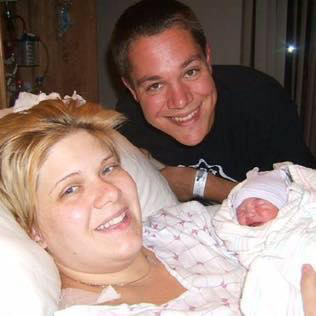
It’s been almost eighteen years
(How, I have not one damn clue)
Eighteen years and… I actually struggle to remember the pain in my back from the prick of the epidural now. I have little to no memory of the PA’s inexperienced fingers as he checked my cervix, I no longer hear the beeping of the machines, feel the chill of the room, or hear the musical on the tv that no one was watching. These physical, tactical memories have faded. They have filed.
I can still remember the empathy and fear in my husband’s eyes when I looked into them and whispered, “I give up. I want the epidural. I’m so sorry,” but it’s no longer right there when I think of it. I have to search for it, have to move other memories out of the way in my head. My voice still cracks telling this part of the story (that hasn’t changed!), but it’s more because I remember the panicked, devastating feeling of feeling responsible for this. I feel sad for 26 year old Erin now, who didn’t realize that none of this was her fault, that all of this was the fault of the system. That she did what she thought she had to do to keep herself and her baby safe – what any mother would have done.
Nearly 18 years and the smell of a hospital room still makes me uneasy, but there’s no longer dread or panic. In fact, there is more comfort now than there used to be. There is and has always been joy too, a great change set into motion. Trauma can be like that – joy and fear and panic all wrapped up together. Change and loss melting into each other.
Birth trauma can be defined as a specific type of Post-Traumatic Stress Disorder (PTSD) that occurs as a result of a difficult birth experience. While not all women have symptoms severe enough to warrant an actual PTSD diagnosis, some surveys conducted on women after they’ve given birth show anywhere from 20-30% of women found their birth experiences to be distressing, terrifying, or out of the range of normal experience. There is also often an overlap with Postpartum Depression (PPD) and birth trauma, leading a lot of women to be diagnosed with PPD when they are really suffering from birth trauma, a specific form of PTSD.
This is not something we talk about in society. When a new baby is born, there is so much time and attention paid to this new life, this new hope that has just come into being. We expect new moms to also be feeling this elation, but what if they aren’t? There is shame in that as well, shame that they aren’t feeling happy, shame that they can’t connect to their baby, and at times, shame over dark and scary thoughts that can make women feel isolated and alone. Maternal mental health is a tricky topic to tackle.
A lot of women think that they can only classify their birth as traumatic if they had a surgery they didn’t expect, or worse, if their baby died or was injured. They don’t feel justified in feeling the way that they do unless something catastrophic occurred. Perhaps they’ve been told “Well at least the baby is healthy,” a statement that is meant to bring comfort, but instead ends up making mom feel as if her feelings are not important. As if the only thing that matters here is the life of the baby. And then there’s more shame in that feeling – what kind of mother is so selfish as to care about her own feelings when there’s a new baby to tend to?
I have been doing the work of helping mothers heal from their traumatic experiences for almost eight years now, and in doing so, I have also worked to heal my own. I have said in many of my posts that my daughter’s birthday has always been two feelings for me – one, joy and happiness over another year, but two, a day of loss and trauma and anxiety for me. I would go through the whole day remembering at what times they started the pit, when they broke my water, when they started the epidural. About three years ago, I realized halfway through the day that I wasn’t doing that. I realized I had to really think about what times things happened, and then I realized that I actually didn’t want or need to do that. That felt strange, like a betrayal to my traumatized self. But then I realized it wasn’t that at all. That it was growth, that it was healing.
These days, I feel like I’ve talked about it enough. I am tired of rehashing it, and I no longer have a reason to. I picked at that scab for a decade before I finally did the work of allowing it to heal. I have done the work of letting the trauma go, of understanding what I had control over and what I didn’t. I am almost 18 years outside of it, the length of time of an entire adult life, my daughter’s childhood life. Sometimes that feels like a really long time and other times it doesn’t, but it no longer feels like yesterday, like it did for years. It no longer feels raw and unfinished. It feels resolved, solid, sewn up. It is a weird feeling to be honest, because for so long “having birth trauma” was a part of my identity, like an odd little group I was part of. I imagine that’s how a lot of people feel when they grow and heal, and even sometimes the reason that people resist growth. It is hard to change how to see yourself when it feels so central to who you are. But sometimes that person doesn’t suit you any longer and it’s ok to let her go.
I wish this healing for all of you, mamas. To be brave enough, to feel worthy enough, to feel important enough. I want you to learn that your trauma is no longer yours to hold, that you can let it go a little at a time, so it’s not so heavy. That peace is possible and so deserved. Peace when you hold your baby, peace when you look at your partner, peace when you remember your birth story. Peace and love and acceptance.
As always, I am honored and blessed to take this journey with you.
________________________________________________________________________________
Erin Newton, LCPC, PMH-C is a life-long resident of Harford County, Maryland. She’s a mother to three girls and has been married to her best friend for twenty years. She has been a therapist for over a decade and in that time has worked with 100’s of individuals, couples, and families during some of life’s most challenging chapters – welcoming a new baby, navigating postpartum emotions, managing anxiety, processing traumatic events, and rebuilding connection between partners. She specializes in birth trauma, maternal and perinatal mental health, first responder wellness, anxiety, OCD and relationship and connection issues. She is a quilter, retired marathon runner (twice!) and has been rockin’ rainbow hair since the fall of 2020.
She has immediate openings for new clients in both Maryland and Pennsylvania for both individuals and couples and can typically get an intake scheduled in a week or less. She is out of network with insurance so that together you can determine how much treatment you need, but can provide a Superbill for reimbursement and accepts an HSA card for services.