

We Need to Talk About Lindsay Clancy
Note: The blog contains descriptions of and mentions of maternal filicide and infanticide and may be distressing to read. Please take care of yourself as you read it.
I don’t know about you, but my social media feed has been full of opinions the last two weeks (I know, I know, when is it not?). Specifically, it’s full of a lot of people who are suddenly experts on postpartum depression and other debilitating maternal mental illnesses. All of this is focused around the Lindsay Clancy trial, which you’ve probably seen something about if you are on social media at all. There is so much to this case (and we’re only on day 13 of the trial so there’s likely more to come) and a lot of it is confusing and contested. This feels like maybe the most important case for perinatal providers to study, so it felt important for me to write about. I’m gonna lay out the few facts that we actually know.
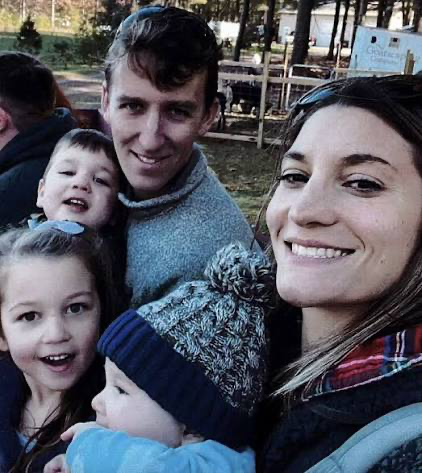
On January 23, 2023, Lindsay Clancy strangled her three children, ages 5 years, 3 years and 8 months, in the basement of her house using exercise bands. She then cut her wrists and neck and jumped from a second story window in an attempt to kill herself. She survived her injuries but is currently paralyzed as a result of her attempt. She had sent her husband out for take out and to pick up prescriptions; he was gone 55 minutes.
Lindsay had been struggling with depression, anxiety, and intrusive thoughts about hurting her children and herself for months. She was also not sleeping well, something that seemed exacerbated by the antidepressant she was put on, suggesting that she might have bipolar disorder. She was hospitalized in December of 2022 and again in early January of 2023 due to continued suicidal thoughts and thoughts of harming her children.
Between September of 2022 and January of 2023, she was prescribed 14 different medications from at least three different providers; it is unclear whether she took all of these medications or how much of them she took. Lindsay was also being seen by two prescribers at the same time, indicating that at the very least, none of her providers were doing a good job with providing wrap-around care. She was also only seen by her prescribers virtually, something that likely did not help in recognizing how serious her symptoms were becoming.
We’ve heard these stories before. The most famous of them, Andrea Yates, a mother from Texas who confessed to drowning her five children one by one in June of 2001. Andrea was driven by thoughts that she was evil and that killing her children was the only way to save their souls from damnation. Up until she killed her children she had attempted suicide multiple times, been hospitalized at least twice and was finally placed on Haldol (an antipsychotic) after her 4th child was born, with medical advice to not get pregnant again, or her symptoms would almost certainly return. Unfortunately, that was true, and her depression and eventual psychosis returned after the birth of her 5th child. She drowned all of her children two months after her 5th baby was born.

Let’s be very clear here. What it seems these women were suffering from is not postpartum depression. I’ve seen a lot of people arguing that, “they had postpartum depression and didn’t kill their kids.” PPD, while debilitating and at times all encompassing, still involves insight and what we call being “ego-dystonic.” What ego-dystonic means is that we can recognize when our thoughts, feelings or behaviors clash with our own personal beliefs. Meaning if we have a thought about or see an image in our mind of drowning our baby in the bathtub, we are horrified at this. These thoughts are intrusive, automatic, and cause great distress and shame. We know we are not the kind of person who drowns our baby, therefore we are very upset that we just had that image pop into our heads.
It is a really common symptom of PPD for Moms to have dark thoughts, such as drowning their babies or suddenly dropping them or throwing them down the stairs. Moms will often start to even avoid their baby, both in an effort to “protect” the baby from them and to eliminate these thoughts. Most moms are so horrified by these thoughts that they won’t share them with anyone – not their families, partners, or doctors – even if the doctor asks! They are terrified that they’ll have their babies removed from them, or worse, that these thoughts actually mean that deep down, they want to hurt their baby. That thought doesn’t align with who they are, and because they are still in a state of ego-dystonia, they recognize that.
No, Lindsay Clancy and Andrea Yates seem to have been suffering from postpartum psychosis, a rare but certainly not unheard of diagnosis impacting 1-2 in every 1000 postpartum women. Note that this is approximately 3200 to 7400 women every year, which is a staggering number for as little as we know about it and as often as providers see it. And while the outcome in both the Lindsay Clancy and Andrea Yates cases are rare, 5% of those women will commit suicide and 4.5% will commit infanticide or fillicide (murdering their children).
Onset is generally within the first two weeks following birth, but late onset cases do happen. Without treatment, it doesn’t go away, so symptoms can last way longer than that.
Symptoms can look like:
- Delusions or strange beliefs,
- Hallucinations (seeing or hearing things that aren’t there),
- Agitation,
- Hyperactivity or having more energy than usual,
- Severe depression or lack of emotion,
- Paranoia or suspiciousness,
- Rapid mood swings;
- Difficulty communicating at times.
Half of all first time mothers who experience postpartum psychosis had no prior psychiatric hospitalizations, so this is not something that’s often easy to predict. More women have this after their first baby, but some women (like Lindsay and Andrea) don’t have any symptoms until after having multiple children.
Risk factors for postpartum psychosis include:
- Being a first time mom,
- Discontinuing a mood stabilizer,
- Complications during pregnancy or birth,
- Perinatal or neonatal loss,
- Previous psychiatric symptoms,
- A family history of bipolar disorder or postpartum psychosis and
- Sleep deprivation.
But the number one most important thing to remember?:
Women with postpartum psychosis do not recognize their thoughts as being horrifying or unreasonable.
Rather than being ego-dystonic, their thoughts are what we call ego-syntonic, which means in that moment the thoughts feel aligned with who they are, their self image, and their desires. Unlike moms with PPD or postpartum anxiety who are horrified by thoughts of harming their babies, women with postpartum psychosis are not. Their thoughts feel rational, even lucid, necessary. They are truly experiencing a break from reality. They may believe that their baby is in danger or that they themselves are in danger of their baby. They may think their baby is evil or that the best thing for their baby is to no longer be alive and that thought feels completely rational to them. They are often paranoid and distrusting of others and may be hearing voices that they can’t distinguish from reality.
It is also important to note that the vast majority of women (95%!) with postpartum psychosis do not harm themselves or their babies and their delusions are not violent. However, the risk of danger to mom and baby is always there because they are experiencing delusional thinking and irrational judgement. These women are not going to realize that their thoughts are harmful. This means that if you’ve ever had a thought about harming your baby that you are horrified by, chances are you are suffering from postpartum depression or postpartum anxiety. You do not actually want to harm your baby (not even deep down inside somewhere) and you recognize that doing so is wrong.
Women with postpartum psychosis cannot do this. They just can’t. They are not able to recognize their own behavior for what it is – a true medical emergency. This is exactly why I personally obtain consent from all my pregnant clients so that I can reach out to their partner following birth if I need to. I often don’t have to do this, but I want to be able to easily let their partner know if something feels off to me and I want them to be able to do the same.

Lastly, a little note that psychosis is not what you think it is. I’m seeing a lot of people stating that Lindsay wasn’t suffering from psychosis because she planned her children’s murders (as did Andrea Yates). When we think of psychosis, we likely think of someone in a constant state of paranoia, rocking back and forth and unable to communicate or jumbling their words – and it can look like that! It would honestly be a lot easier if that’s what it always looked like, but symptoms can wax and wane. Mothers can look “fine” and make sense one moment and then have a moment of complete paranoia the next. I’ve had clients in psychosis who make sense and seem lucid and it’s only when I see little slips in their thinking that I recognize something might be wrong. It’s not even something that everyone would see, I could see lay people completely missing it. Mothers can play with their children and take them to the doctor in the morning, and then plan their murder in the evening because remember – their thoughts make sense to them.
On the day her children died, Patrick Clancy said that his wife was “having one of her best days” and that makes sense to me. Maybe she had a moment where her lucid brain was working, or maybe, often as people do when they choose to commit suicide, she was at peace with the plan to kill her children and then herself because for some reason that seemed like a necessary and rational thing to do.
Naturally, I have a lot of opinions about this case that I”m not going to completely address here. A lot of people failed this woman, her family, and most of all, her children. She had a lot of care, but no one provider held all the pieces and therefore no one had the whole picture. We are taught over and over again as therapists about coordinated care, about reaching out to your client’s prescribers and doctors so that we all have the best information necessary to treat our clients, but in over 10 years of practice, I can count on one hand that a prescriber has reached out to me. Lindsay Clancy’s case is why collaborative care is so so important. This case has surely rocked the therapist and prescriber community as we look at how we can do better, how we can keep the Lindsay Clancy’s of the world from falling through the cracks.
As someone reading about and engaging in the case, you can do your part by not only educating yourself and others about the differences in these disorders, but also reaching out to your mom friends to check on them. The insidious nature of this illness is that it often has to be discovered rather than reported. People who do not have insight will not know that their thoughts are wrong or dangerous. We have to look out for each other. And finally, the way we talk about maternal mental health matters. When you read about this case and you pass judgement on Lindsay or worse, you say horrible, hateful things about her and women like her, you make it that much harder for women to report when they have dark thoughts and when they need help. You create shame. You create distance. And the way we respond to one woman in crisis may determine whether another one asks for help.

If you or someone you know may be suffering from postpartum psychosis, please seek an evaluation from a medical provider. This is not something that can wait! Please call your doctor, 911, or a national crisis hotline or local crisis facility such as the Harford Crisis Center in Harford County.
_________________________________________________________________________________________
Erin Newton, LCPC, PMH-C is a life-long resident of Harford County, Maryland. She’s a mother to three girls and has been married to her best friend for over twenty years. She has been a therapist for over a decade and in that time has worked with 100’s of individuals, couples, and families during some of life’s most challenging chapters – welcoming a new baby, navigating postpartum emotions, managing anxiety, processing traumatic events, and rebuilding connection between partners. She specializes in birth trauma, maternal and perinatal mental health, first responder wellness, anxiety, OCD and relationship and connection issues. She is a quilter, retired marathon runner (twice!) and has been rockin’ rainbow hair since the fall of 2020.
She has immediate openings for new clients in both Maryland and Pennsylvania for both individuals and couples and can typically get an intake scheduled in a week or less. She is out of network with insurance so that together you can determine how much treatment you need, but can provide a Superbill for reimbursement and accepts an HSA card for services.